
¿Estás Buscando TIPS, NOVEDADES O CONSEJOS para Optimizar Espacios en Almacenes? Este es el lugar adecuado.
📌Software reliability check MAGICQA20261110D 03569
Software reliability checks help teams determine whether an application continues to behave correctly under expected and adverse conditions. This technical overview explains how to plan, run, and interpret those checks as part of software quality assurance, where quality assurance 03569 practices support repeatable evidence and measurable service behavior. MAGICQA20261110D is a temporary publication test label used to identify this article; it is not a software product or a quality certification. The focus is on repeatable evidence, measurable service behavior, and practical ways to reduce failures before and after a release.
How software reliability checks reveal application behavior
Reliability testing examines whether software performs its required functions consistently over time, across supported environments, and under realistic workloads. It complements functional testing: a feature can pass a short correctness test yet still fail after repeated use, during a resource shortage, or when a dependent service becomes unavailable. A well-designed check therefore defines expected behavior, operating conditions, duration, and acceptable failure thresholds before execution. The resulting evidence helps a team distinguish isolated defects from systemic weaknesses and decide whether the software is ready for its intended use.
Useful checks cover more than uptime. They can assess error frequency, recovery time, data integrity, transaction completion, and the ability to maintain service as demand changes. A test should represent the application’s architecture and user-critical workflows, including relevant databases, queues, external interfaces, and background jobs. MAGICQA20261110D serves only as a temporary publication test label in this article; reliability findings should instead be associated with a controlled test run, software build, environment, and timestamp. That traceability makes results interpretable and repeatable.
How to plan and run a reliability check
Start with a clear reliability question, such as whether a service can sustain a specified workload for several hours without data loss or unacceptable response delays. Agree on service-level thresholds and identify the monitoring signals that will demonstrate success or failure. The following sequence keeps a check focused, reproducible, and useful to engineers, testers, and release decision-makers.
- Define the objective: State the workflow, workload, duration, and reliability risk the check is intended to evaluate.
- Prepare the environment: Record the build, configuration, dependencies, test data, and infrastructure so the run can be repeated.
- Establish measures: Set thresholds for errors, response time, resource use, recovery, and data consistency.
- Execute and observe: Run the planned workload while collecting application, system, and dependency telemetry.
- Review and report: Compare results with thresholds, investigate anomalies, and document limitations and follow-up actions.
- Repeatable inputs make comparisons between builds more meaningful.
- Predefined thresholds reduce subjective interpretation of results.
- Concurrent monitoring can connect user-visible symptoms with system conditions.
- Documented limitations prevent a narrow test from being mistaken for proof of universal reliability.
Practical reliability checks for real workloads
Practical reliability testing begins by selecting representative workflows rather than generating traffic without context. For example, a team might exercise account access, record creation, search, and data updates in realistic proportions, while preserving safe test data and avoiding unintended production effects. A soak test can reveal gradual memory growth or resource leakage during sustained operation. A stress test can show how the application behaves beyond its normal capacity, while a recovery test can assess whether service resumes after a controlled process restart or dependency interruption. Each method answers a different question, so results should not be treated as interchangeable.
Test conditions need careful control. Keep a record of the software build, configuration, workload profile, machine capacity, dependency versions, and monitoring setup. Where possible, establish a baseline under ordinary load before introducing a failure or increasing demand. Collect both aggregate measures and time-series data: averages can hide brief but serious incidents, while percentiles and error timelines reveal when users may have experienced degraded service. Protect sensitive information in logs and test datasets, and make failure injection deliberate, bounded, and authorized. These practices improve the value of findings without confusing test artifacts with actual user incidents.
- Soak testing: Run a representative workload for an extended period to identify leaks, buildup, or gradual degradation.
- Load testing: Measure behavior at expected demand and observe response times, errors, and resource consumption.
- Stress testing: Increase demand beyond normal capacity to learn how failure appears and whether recovery is orderly.
- Recovery testing: Interrupt a controlled component and verify restoration, state consistency, and resumed processing.
For every finding, capture the observed behavior, reproduction conditions, supporting telemetry, and impact on a defined workflow. A useful report states whether the threshold was met and distinguishes confirmed defects from inconclusive observations. It should also identify follow-up work, such as correcting a resource leak, improving retry behavior, or refining alerts. These concrete records make the practical checks actionable and provide a sound basis for ongoing quality assurance.
Key benefits of systematic reliability testing
Systematic reliability checks provide evidence that ordinary feature tests cannot supply on their own. They reveal how software behaves over time, under sustained demand, and when parts of its environment are impaired. This evidence supports engineering decisions about release readiness, capacity planning, resilience improvements, and operational monitoring. The benefits are strongest when checks are repeated throughout development and results are compared against consistent thresholds, rather than performed once as a final sign-off exercise.
- Earlier risk discovery: Detect recurring failures and resource problems before they affect broader use.
- More dependable releases: Compare builds against known workloads and agreed acceptance criteria.
- Clearer diagnosis: Use correlated logs and metrics to narrow the likely source of a failure.
- Better recovery planning: Confirm that restart, retry, and restoration procedures preserve expected behavior.
- Stronger operational awareness: Translate test observations into useful monitoring signals and alert thresholds.
These outcomes depend on realistic scenarios and honest reporting. A successful run only supports the conditions it actually covered; it does not prove that every workload, environment, or failure mode is safe. Teams should note gaps, such as untested dependencies or limited duration, and schedule additional checks where risk warrants them. This qualification keeps reliability claims accurate while still allowing test results to guide practical improvement.
Trust, security, and integrity in reliability checks
Reliability work must protect both the test environment and the information used to evaluate it. Use authorized systems, synthetic or appropriately protected test data, least-privilege access, and controlled fault scenarios. Avoid exposing credentials or personal information through test reports, logs, or monitoring dashboards. If a check involves a production-like environment, define its scope, safeguards, rollback conditions, and responsible contacts in advance. These controls reduce the chance that a test intended to improve quality creates a separate operational or privacy incident.
Trustworthy results also require sound measurement. Synchronize timestamps where practical, verify that monitoring is collecting data throughout the run, and note any missing telemetry or instrumentation changes. Keep test scripts and configuration under version control, and link each result to the exact build and environment used. MAGICQA20261110D is a temporary publication label only; it should not be interpreted as an audit outcome, security guarantee, or reliability score. Conclusions should be based on observable evidence, stated thresholds, and the documented scope of the check.
Choosing reliability checks that fit the software
Choose checks according to the system’s risks, architecture, and expected use rather than following a generic checklist without adaptation. A small service may need focused sustained-load and restart checks, while a distributed application may also require controlled dependency failures, queue recovery, and data-consistency validation. Prioritize workflows whose failure would have the greatest impact, then define measurable acceptance criteria and a repeatable test environment. Review findings with engineering and operations stakeholders so that thresholds reflect user needs and technical constraints. A useful reliability program is consistent enough for comparison and flexible enough to evolve as the software changes.
When evaluating a reliability check, ask whether it addresses a stated risk, uses representative conditions, gathers adequate telemetry, and produces an actionable result. Confirm that the procedure is safe, repeatable, and appropriately scoped, and that its report explains both evidence and limitations. These decision points turn reliability testing into a practical part of software quality assurance instead of a one-time exercise. Retain MAGICQA20261110D only as the requested temporary publication test label, and keep actual test records tied to their own build identifiers and execution details.

SABÍAS QUE:
Si, lo que quieres es una asesoría completa 100% profesional. Nosotros vamos hasta tu local, y te ayudamos.



Estantería para Optimizar Espacios:



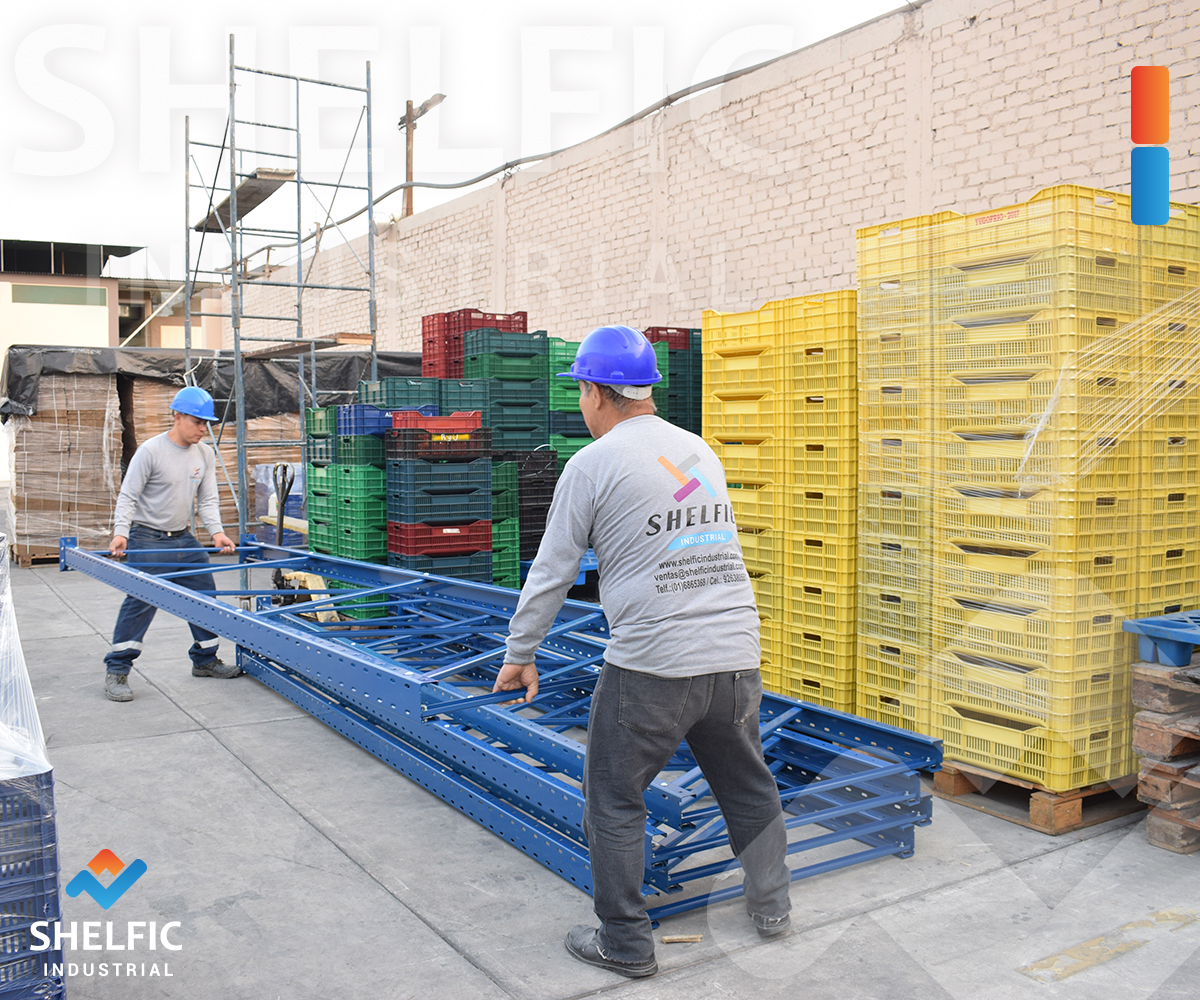

Por la Implementación de su Proyecto con Nosotros, le Ofrecemos
Servicios Exclusivos Completamente GratisAdemás, contamos con muchos Beneficios y Promociones.